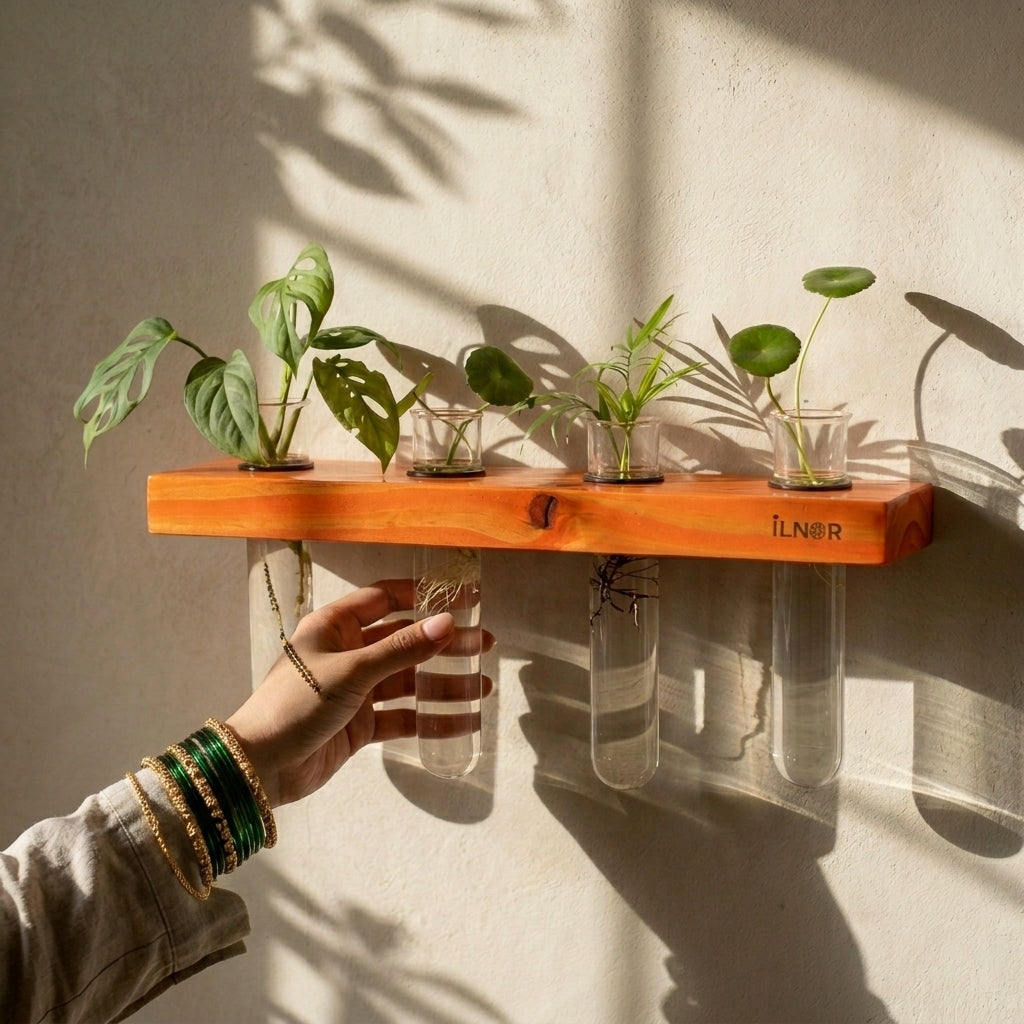
A Modern Beginner’s Guide to Growing Smarter with ILNOR
Clean design. Minimal waste. Maximum growth.
That’s the philosophy behind hydroponics — and honestly, it feels deeply aligned with what ILNOR stands for: intentional living through thoughtful design.
Whether you’ve seen aesthetic indoor herb walls on Pinterest, futuristic LED plant setups on Instagram, or minimalist floating plant shelves in modern homes, hydroponics is no longer just for commercial farms. It’s becoming part of modern interior culture.
This guide breaks down everything you need to know about hydroponics in a simple, editorial-style format inspired by premium design blogs like Shelfology.
What is Hydroponics?
Hydroponics is a method of growing plants without soil.
Instead of drawing nutrients from dirt, plants grow in a water-based nutrient solution enriched with minerals essential for growth. Their roots are either suspended directly in water or supported by materials like coco peat, clay pellets, or rockwool.
At its core, hydroponics is about:
- Cleaner growing
- Faster growth cycles
- Better space efficiency
- Controlled nutrition
- Minimal water waste
Think of it as precision gardening for modern spaces.
Why Hydroponics is Growing So Fast
Traditional gardening can be beautiful, but it often comes with limitations:
- inconsistent soil quality
- pests
- excessive watering
- seasonal dependency
- messy maintenance
Hydroponics solves many of these issues while creating a cleaner and more design-friendly growing system.
Key Benefits
1. Faster Plant Growth
Plants receive nutrients directly through water, which means they spend less energy searching for nutrition.
The result:
- quicker growth
- healthier leaves
- stronger roots
2. Uses Less Water
Hydroponic systems can use up to 80–90% less water than traditional soil gardening because water is continuously recycled.
3. Perfect for Small Spaces
Apartments, balconies, studios, offices — hydroponics works beautifully in compact modern interiors.
4. Cleaner & Minimal
No mud. No overflowing pots. No messy drainage.
Just structured, intentional greenery.
5. Year-Round Growing
With proper lighting, you can grow herbs, greens, and decorative plants throughout the year.
How Hydroponics Actually Works
At a basic level, hydroponics relies on three things:
| Element | Purpose |
|---|---|
| Water | Delivers nutrients |
| Nutrients | Feed the plant |
| Light | Powers photosynthesis |
The plant absorbs everything directly through the root system.
The simplified relationship looks like this:
Unlike traditional soil gardening, hydroponics gives you much greater control over each variable.
Types of Hydroponic Systems
There isn’t just one kind of hydroponic setup. Different systems work for different lifestyles and spaces.
1. Deep Water Culture (DWC)
The roots sit directly in oxygenated nutrient-rich water.
Best For:
- lettuce
- basil
- mint
- beginner setups
Why People Love It:
- affordable
- simple
- low maintenance
2. Nutrient Film Technique (NFT)
A thin stream of nutrient water continuously flows across the roots.
Best For:
- leafy greens
- compact indoor farms
- vertical systems
Aesthetic Appeal:
NFT systems often look incredibly clean and futuristic.
3. Drip Systems
Nutrient solution drips slowly into the plant base.
Best For:
- tomatoes
- peppers
- larger fruiting plants
Why It’s Popular:
Very scalable for home and commercial use.
4. Vertical Hydroponics
Plants grow upward instead of outward.
Perfect for:
- apartments
- compact homes
- modern interior installations
This style pairs beautifully with minimal shelving systems and architectural interiors.
Best Plants for Beginners
If you’re just getting started, choose plants that grow quickly and tolerate beginner mistakes.
Easiest Plants to Grow Hydroponically
- Basil
- Mint
- Lettuce
- Spinach
- Green onions
- Coriander
- Pothos
- Strawberry
These plants adapt well and show visible growth quickly — which keeps the experience rewarding.
Lighting Matters More Than Most People Think
Lighting completely changes how hydroponic spaces feel.
Good lighting can turn a simple plant setup into a design feature.
Inspired by premium shelving and lighting editorials, modern hydroponic interiors often use:
- warm LEDs
- indirect shelf lighting
- underglow systems
- focused grow lights
- architectural shadows
Common Lighting Types
Ambient Lighting
Creates overall softness and mood.
Task Lighting
Focused lighting for growth efficiency.
Accent Lighting
Highlights specific plants or display areas.
Choosing the Right Grow Light
LED Grow Lights
The most efficient and modern option.
Why LEDs Win
- low heat
- energy efficient
- sleek design
- long lifespan
Most modern indoor hydroponic setups use full-spectrum LED systems.
Designing a Beautiful Hydroponic Space
Hydroponics doesn’t need to look overly technical.
The best setups blend:
- natural textures
- soft lighting
- matte finishes
- floating structures
- clean geometry
At ILNOR, this philosophy naturally aligns with:
- floating shelves
- minimal architectural lines
- warm modern aesthetics
- functional decor
A hydroponic corner should feel like part of the room — not a science experiment.
Common Beginner Mistakes
Overfeeding Nutrients
More nutrients ≠ faster growth.
Too much can damage roots.
Poor Lighting
Weak light creates weak plants.
Lighting consistency matters more than intensity alone.
Ignoring pH Levels
Most hydroponic plants prefer:
This range helps plants absorb nutrients properly.
Lack of Air Circulation
Fresh airflow prevents mold and keeps plants healthier.
Is Hydroponics Expensive?
Not necessarily.
You can start small with:
- a mason jar
- nutrient solution
- LED light
- herb seeds
Or build a premium architectural setup integrated into your interiors.
Hydroponics scales beautifully depending on:
- your budget
- your space
- your aesthetic goals
The Future of Modern Living
Hydroponics sits at the intersection of:
- sustainability
- technology
- wellness
- design
And honestly, that’s why it feels so relevant today.
Modern homes are shifting toward:
- intentional spaces
- cleaner aesthetics
- multifunctional interiors
- calming greenery
Hydroponics supports all of it.
Final Thoughts
Hydroponics is more than a growing method.
It’s a cleaner, calmer, and smarter way to bring nature into modern spaces.
Whether you’re growing fresh basil in your kitchen, designing a vertical indoor garden, or building a full minimalist plant wall, hydroponics offers something traditional gardening often cannot:
precision with beauty.
And that’s exactly the kind of philosophy modern interiors are moving toward.
Explore More from ILNOR
Minimal spaces deserve intentional details — from architectural shelving to elevated living systems designed around modern aesthetics.
Because good design should grow with you.